


Oceanic Whitetip Sharks at Elphinstone — Complete Dive Guide
Elphinstone Reef holds one of the most consistent oceanic whitetip populations in the Red Sea — this guide covers their behaviour, the safety briefing protocol, and how to dive with them responsibly.
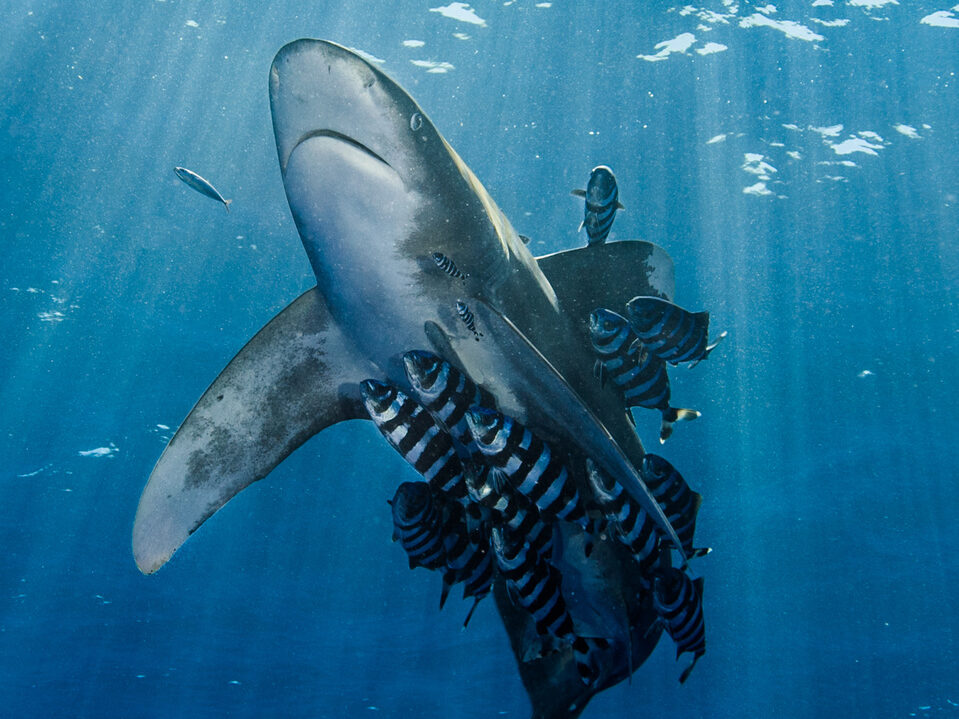
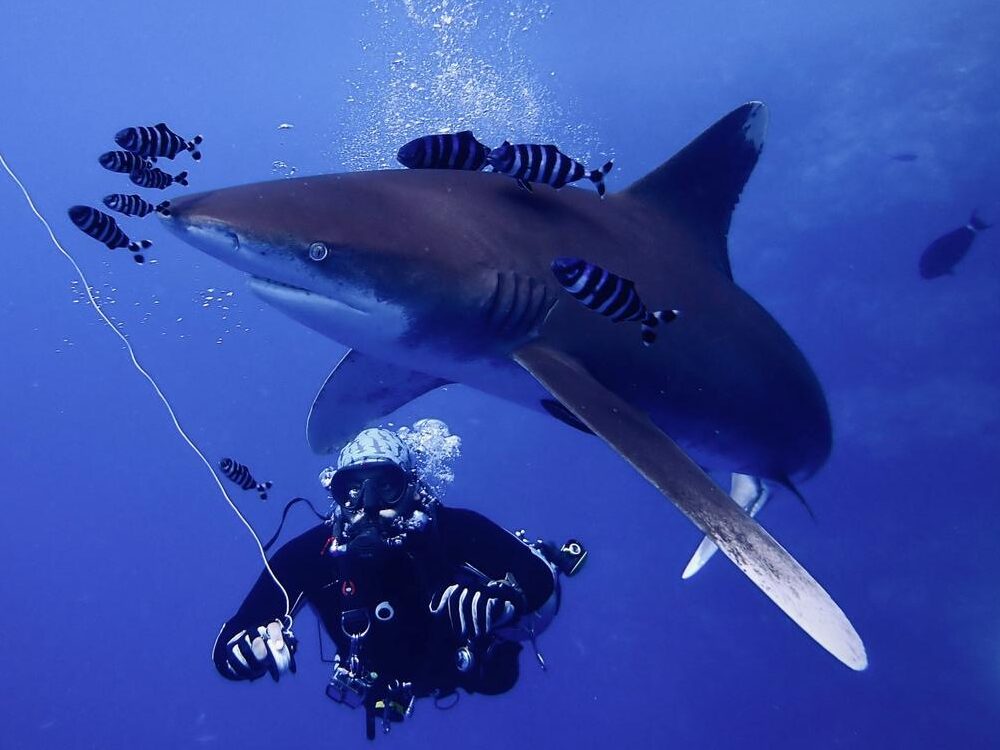

Oceanic whitetip sharks at Elphinstone Reef — MY JPMarine / DiveSafariMaster / Franziska Stier
About the Oceanic Whitetip
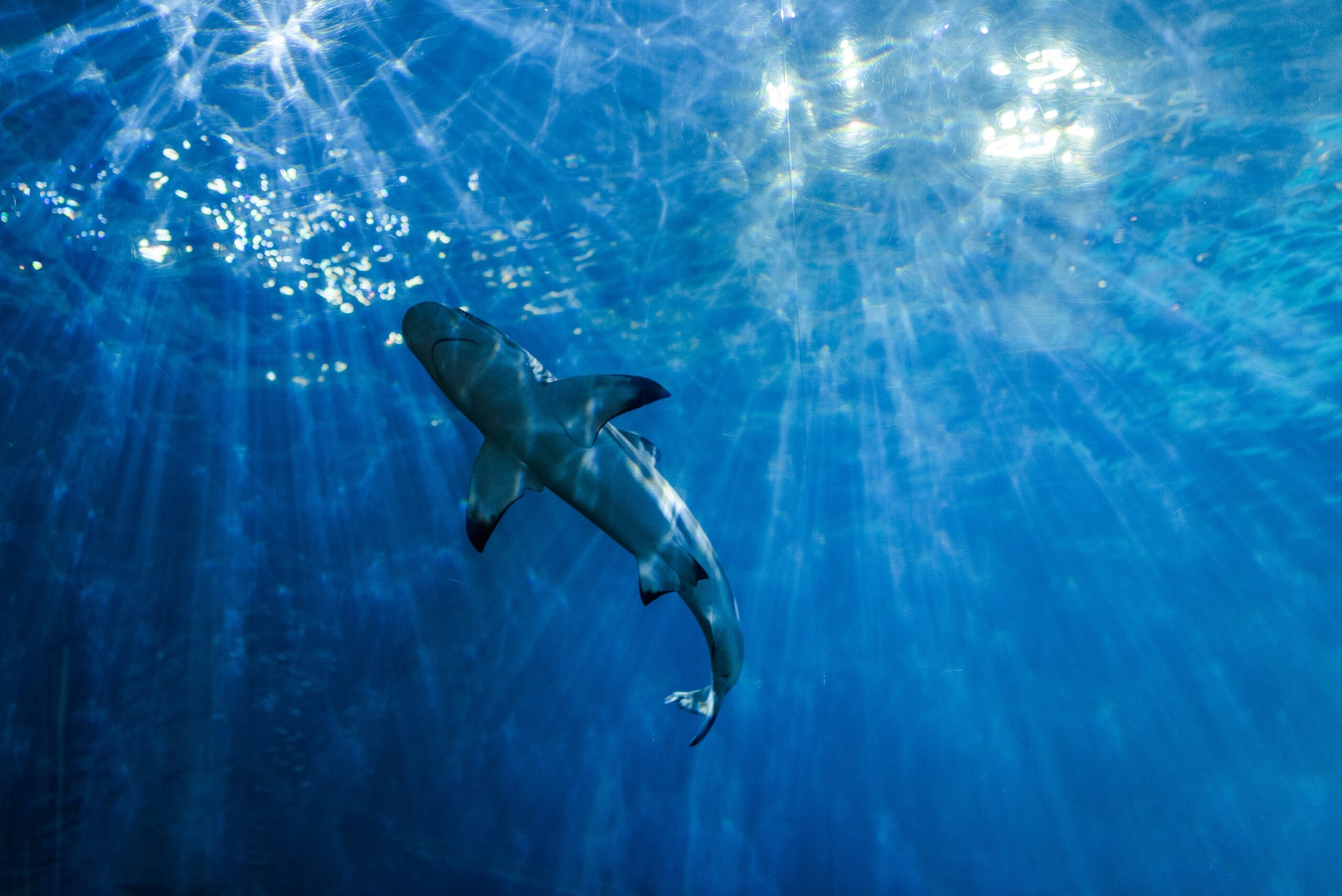
The oceanic whitetip (Carcharhinus longimanus) is one of the most distinctive sharks in open water — a large, thickset animal with broad, rounded fins tipped in white. Adults reach 2–3 metres. They move slowly, hold a steady course, and typically approach divers with curiosity rather than aggression. Pilot fish follow them closely, often riding the bow wave just ahead of the snout.
| Feature | Oceanic Whitetip | Grey Reef Shark | Hammerhead |
|---|---|---|---|
| Typical size | 2–3 m | 1.5–2 m | 2.5–4 m |
| Habitat at Elphinstone | Open water, reef edge, near surface | Reef wall, mid-water | Deep blue, thermocline |
| Behaviour toward divers | Curious, slow, approaches directly | Cautious, maintains distance | Distant, rarely close |
| Identification | White fin tips, rounded dorsal | Black-tipped fins, slender body | Distinctive hammer-shaped head |
| IUCN Status | Critically Endangered | Near Threatened | Critically Endangered |
Behaviour at Elphinstone Reef
Elphinstone Reef sits roughly 20 km offshore from Marsa Alam in the southern Red Sea. It is a deep offshore reef with steep walls, strong currents, and consistent pelagic activity — the kind of habitat oceanic whitetips use. They are not residents tied to a single structure; they patrol open water and visit the reef, often staying close to the surface or moving along the reef edge.
🦈 Where encounters typically happen at Elphinstone:
✔️ Along the north and south plateaux — the shallow tops of the reef where divers do safety stops
✔️ In the blue water off the reef edge, especially during drift dives
✔️ Near the surface and the boats — whitetips are comfortable in very shallow water
✔️ At mid-water depths between 10–30 m during the main dive
Conditions vary day to day. Our guides read the shark’s behaviour before every dive and adjust the plan accordingly. A fixed promise of “best sightings at X metres at Y time” does not reflect how these animals actually move — encounter quality depends on current, visibility, and what the shark decides to do.
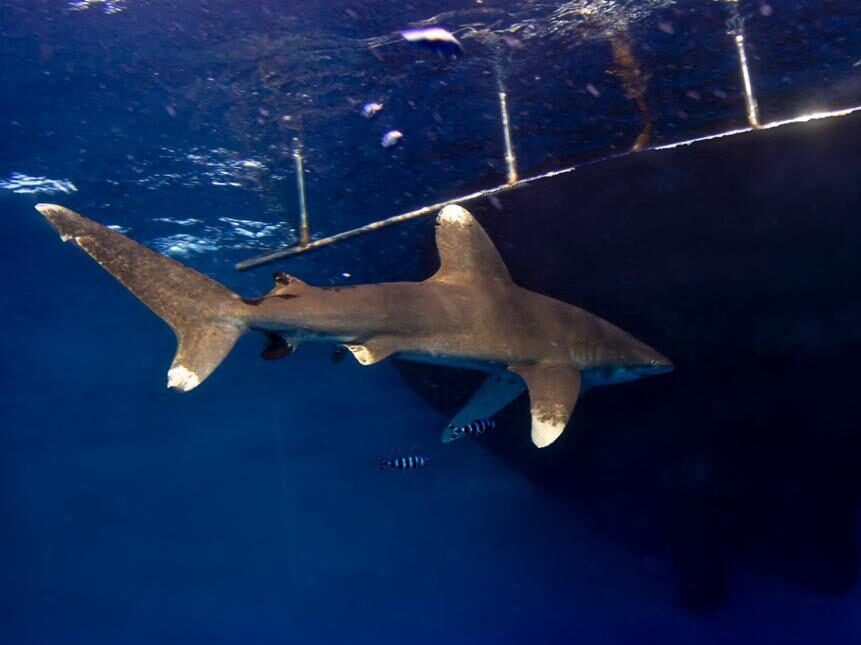
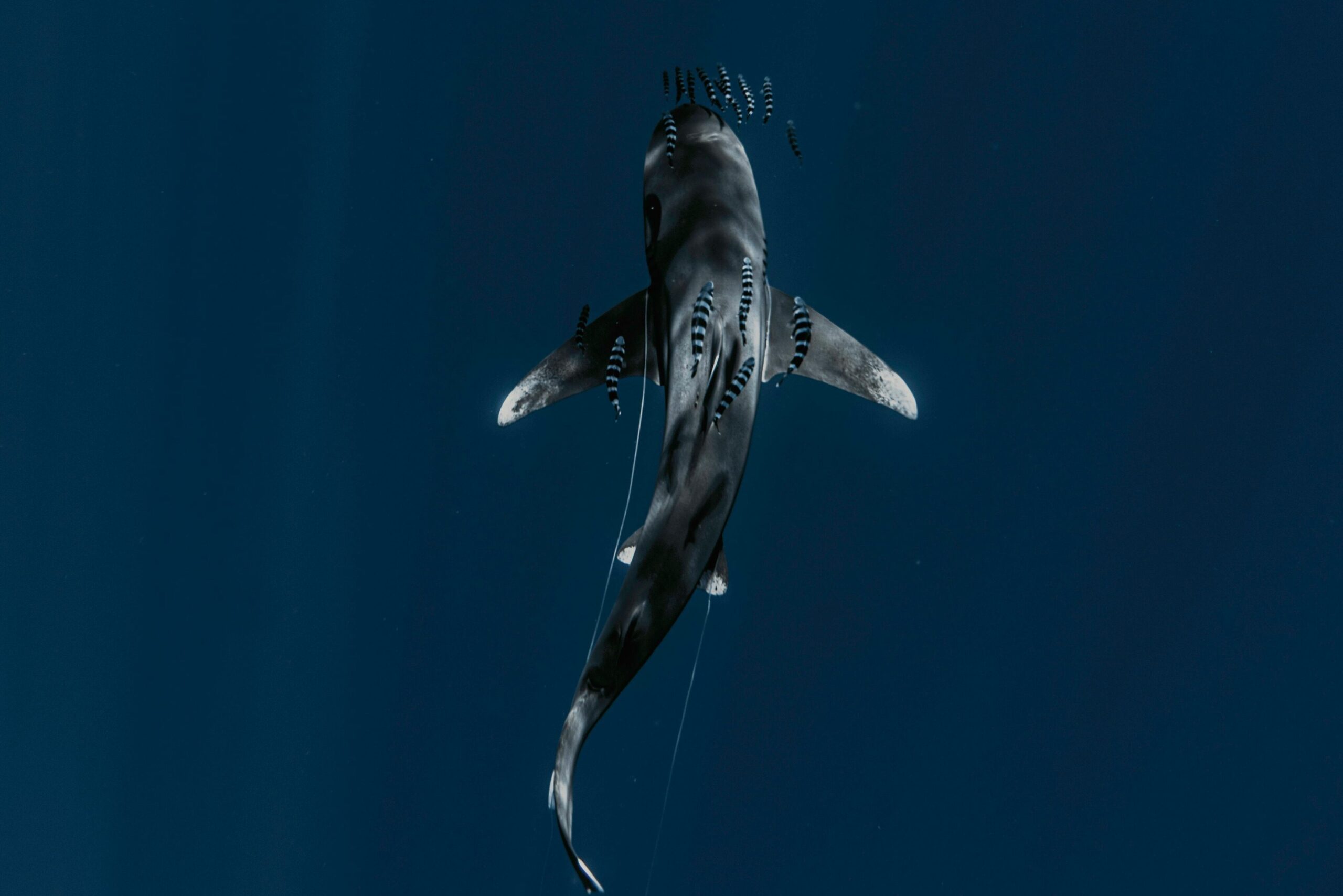
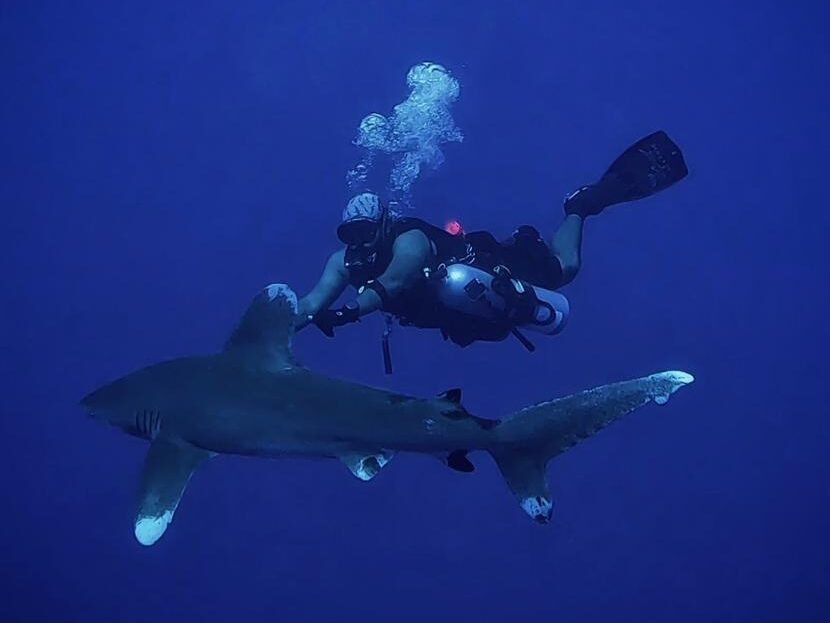
Oceanic whitetip sharks at Elphinstone Reef — MY JPMarine / DiveSafariMaster / Franziska Stier
The Safety Briefing Protocol
Before every dive at Elphinstone, we run a species-specific briefing based on the Dr Elke Bojanowski / Red Sea Sharks behavioural safety briefing protocol. This is not a generic shark briefing. It covers the particular behaviour patterns of oceanic whitetips and gives divers a clear set of rules for what to do when one approaches.
The briefing exists because oceanic whitetips behave differently from reef sharks. They approach slowly and directly, hold their line, and do not retreat when divers hold their ground. Knowing this in advance — and knowing what to do — makes the encounter safe and calm for everyone in the water.
✔️ Rules covered in every Elphinstone briefing:
✔️ Do not chase, touch, feed, or harass the shark — in any form
✔️ Stay calm and maintain good buoyancy — erratic movement draws attention
✔️ Remain with the group — do not separate or drift away from the guide
✔️ Keep visual contact with the shark — face it, do not turn your back
✔️ Follow the guide’s signals at all times — the guide reads the shark’s posture and decides when to end proximity
✔️ Hold your position — if the shark approaches, stop moving and let it pass
Important
If you miss the briefing, you do not enter the water. This applies to every diver, regardless of experience level. The protocol is not optional at this site.
How to Dive with Oceanic Whitetips
| Situation | Do this | Not this |
|---|---|---|
| Shark approaches | Stop, face the shark, hold position | Back away, turn and fin hard |
| Shark circles the group | Rotate slowly to keep it in sight, stay together | Break formation, photograph from above |
| Guide signals ascent | Ascend slowly as a group, maintain contact | Delay ascent for photos |
| Shark at safety stop depth | Complete your stop, face outward, follow guide | Cut the stop short or rush to the surface |
| Feeling uncertain | Signal the guide immediately | Act independently without signalling |
Certification matters here. Elphinstone on the BDE itinerary requires AOWD and a minimum of 50 logged dives. This is not a bureaucratic threshold — it reflects the kind of situational awareness and buoyancy control the site demands. Divers who are still managing their equipment cannot also read a shark’s body language and follow a guide’s signals simultaneously.
Dive Elphinstone on our next departure
Check available dates or reach out — we answer quickly.
Or prefer email? info@divesafarimaster.com
Conservation Status
The oceanic whitetip is listed as Critically Endangered on the IUCN Red List — one of the highest risk categories before extinction. Populations have declined sharply worldwide due to fishing pressure and bycatch, particularly in longline fisheries targeting tuna. The species was once among the most abundant large sharks in the open ocean. That is no longer the case.
Elphinstone is one of a small number of sites globally where encounters with oceanic whitetips remain consistent. That consistency is not automatic — it depends on the reef staying healthy, fishing pressure staying low, and every dive operation at the site running responsible encounters. How divers behave in the water at Elphinstone today has a direct effect on whether the population remains at this site long-term.
We follow the environmental sustainability standards we hold ourselves to on every trip. At Elphinstone, that means the briefing is non-negotiable, guides control proximity, and no feeding or baiting takes place — ever.
Which Itinerary to Choose
| Feature | 🦈 BDE | 🔹 Pelagic Trail |
|---|---|---|
| Elphinstone included | ✔️ Yes | ✔️ Yes |
| Also includes | Brothers Islands, Daedalus Reef, Elphinstone Reef | Daedalus, Sataya, Elphinstone |
| Minimum certification | AOWD + 50 dives | OWD+ |
| Shark species possible | Oceanic whitetip, thresher, hammerhead, grey reef | Oceanic whitetip, hammerhead, silvertip |
| Duration | 7 nights | 7 nights |
| Best suited for | Experienced shark divers, AOWD minimum | Intermediate divers wanting pelagic encounters |
Both routes visit Elphinstone. The Brothers, Daedalus & Elphinstone itinerary is the more demanding route and is aimed specifically at experienced shark divers. The Pelagic Trail covers a different set of offshore reefs and is accessible from OWD+, making it a strong option for divers still building their open-water experience. Both depart from Marsa Alam aboard MY JPMarine, Saturday to Saturday.
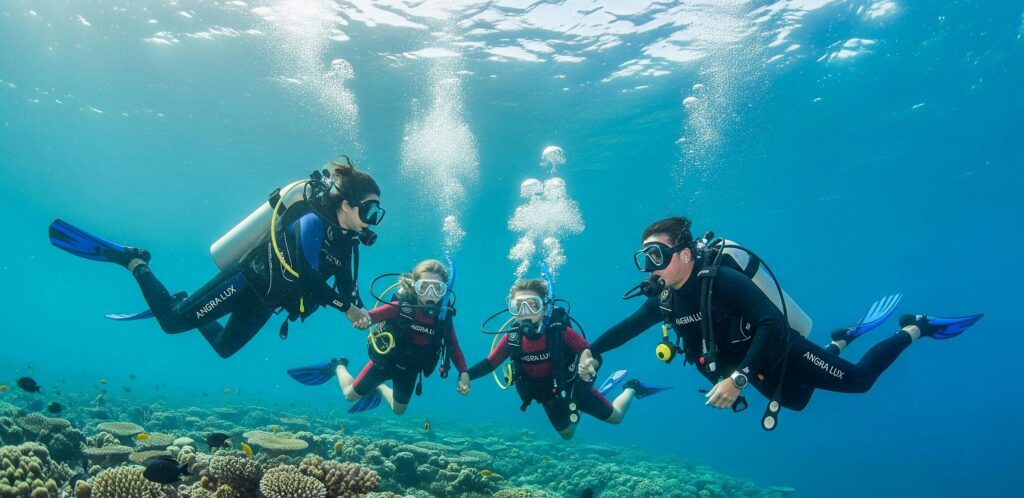
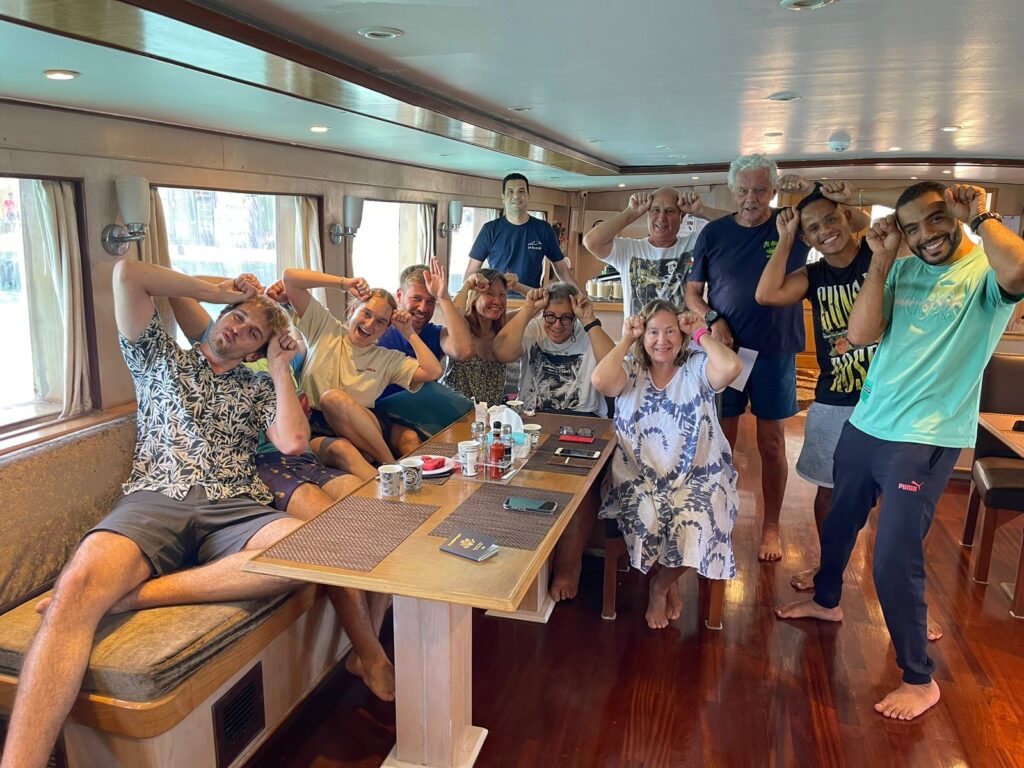
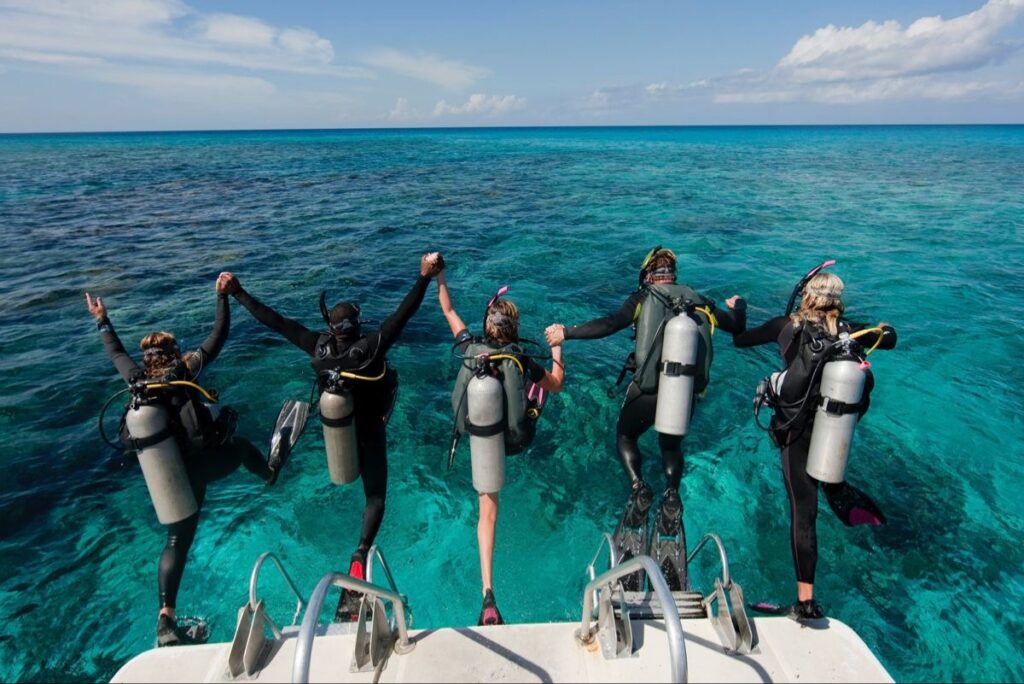
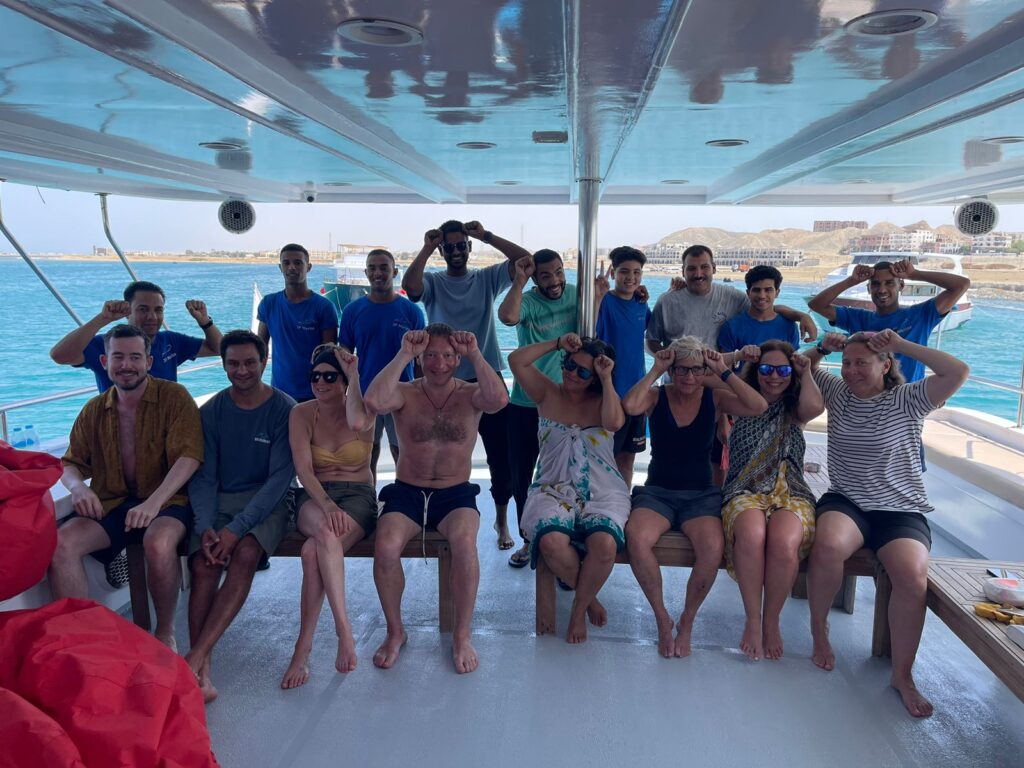
Aboard MY JPMarine — pre-dive briefing and encounters at Elphinstone Reef
Our Best-Selling Itineraries
Each route hand-crafted by our team. Solo divers, groups, and full charters welcome.

Prepare for Your Trip
We’re in business since 1999 · Southern Red Sea
Your Safety is Our Standard
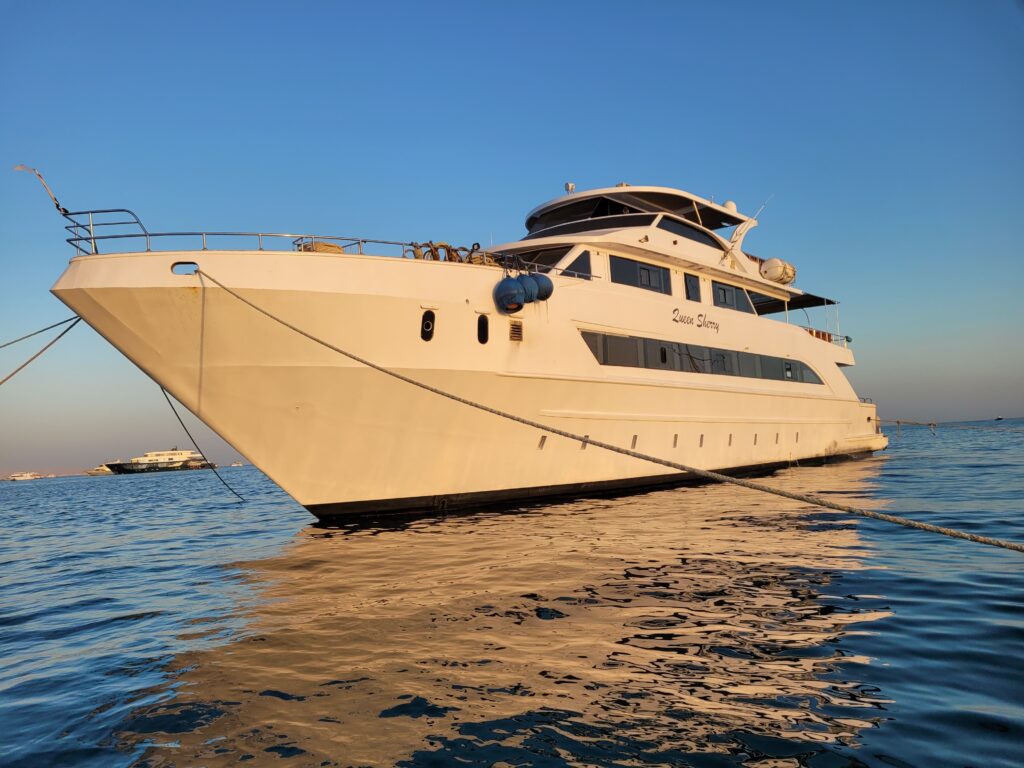
MY JPMarine — built and maintained to the highest safety standards

FAQ
Questions we get every week
Are oceanic whitetip sharks dangerous to divers?
What certification do I need to dive Elphinstone on the BDE route?
Can OWD divers dive Elphinstone on the Pelagic Trail?
What is the Dr Elke Bojanowski / Red Sea Sharks protocol?
Is there a guaranteed sighting of oceanic whitetips at Elphinstone?
Why are oceanic whitetips Critically Endangered?
Dive Elphinstone with Us
Book directly — no agency fees, no hidden costs.
Or email us: info@divesafarimaster.com