


What to Expect from Your First Shark Dive — Complete Guide
Preparation, the briefing, behaviour underwater, what you will see and how the day actually runs — everything a first-time shark diver needs to know before getting in the water.
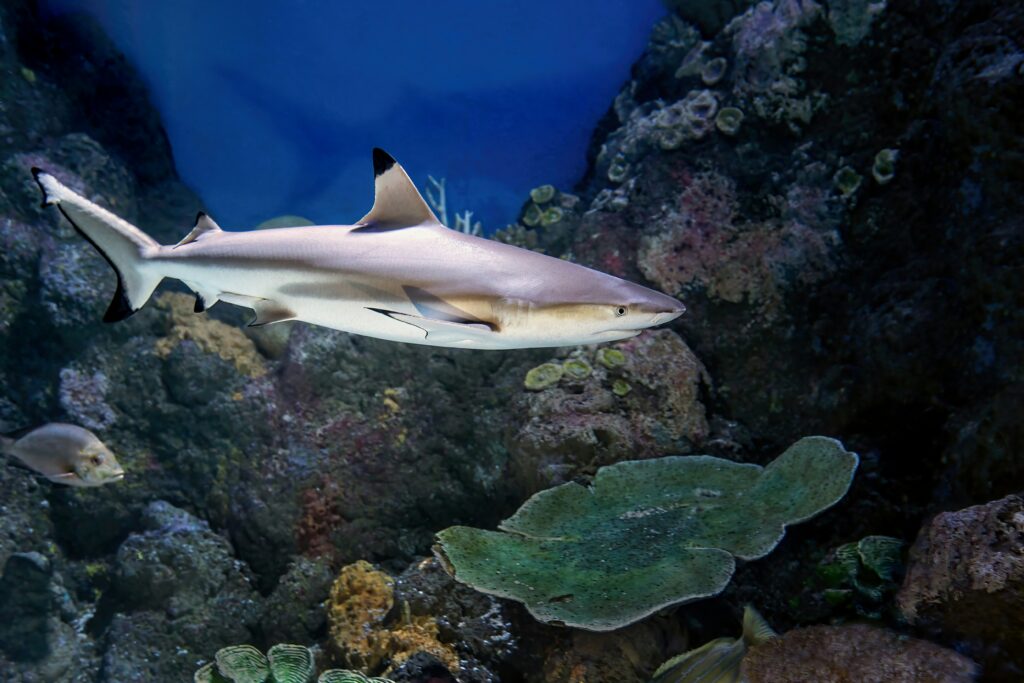
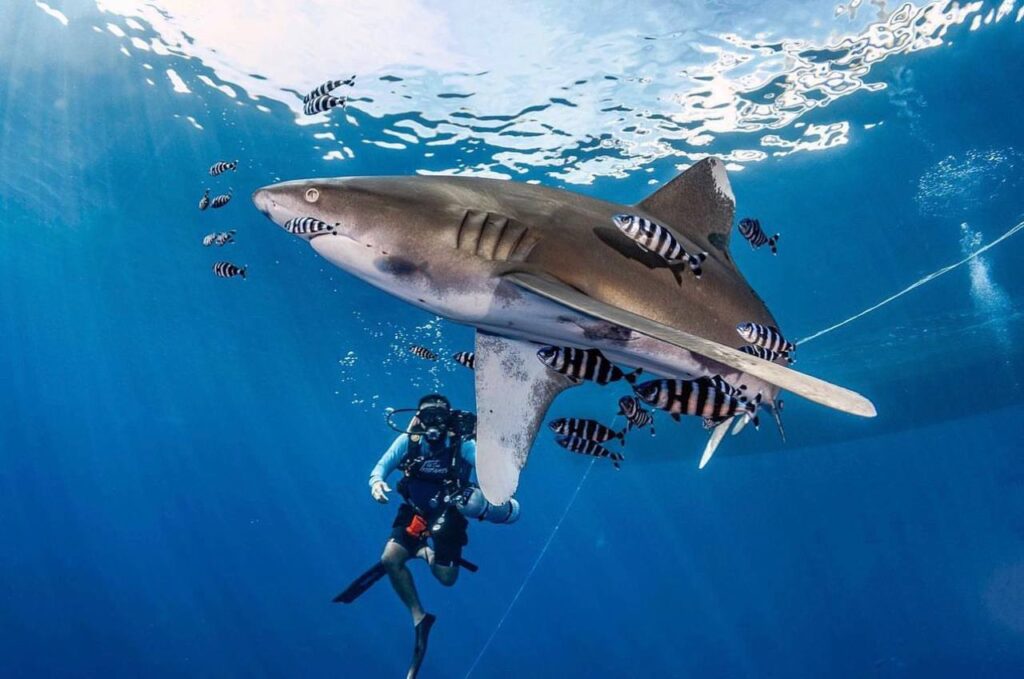
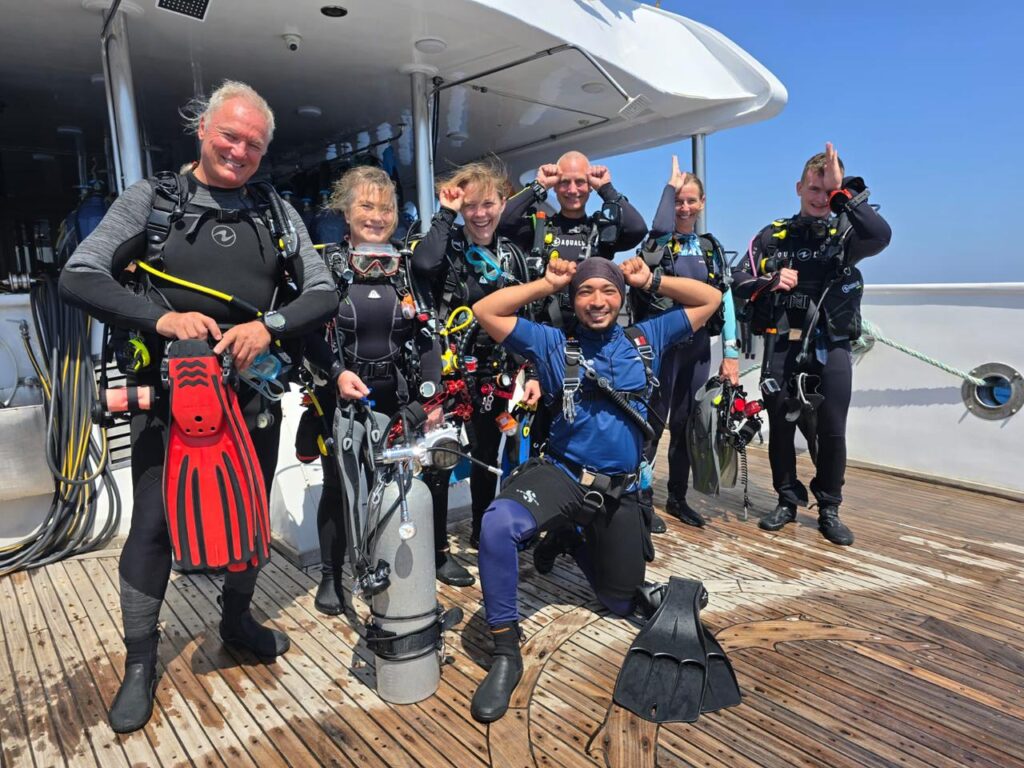
Sharks at Daedalus Reef and Brothers Islands · Pre-dive briefing aboard MY JPMarine · Photos from DSM expeditions
Before you go — preparation and certification
The most common question before a first shark dive is whether it requires special training or experience. In the Red Sea, the answer is straightforward: Open Water certification is enough to dive with sharks at Daedalus Reef on the Blue Trail at 15–20m. No shark specialty, no extra course, no minimum number of logged dives — just a valid OWD card and a willingness to follow the briefing.
| What you need | OWD (Open Water) | AOWD (Advanced Open Water) |
|---|---|---|
| Certification required | ✔ OWD card valid | ✔ AOWD card valid |
| Minimum logged dives | No minimum for Pelagic Trail | 50 dives for BDE itinerary |
| Daedalus Blue Trail (15–20m) | ✔ Hammerheads, whitetips | ✔ Yes |
| Daedalus Red Trail (25–40m) | ✘ Exceeds OWD depth limit | ✔ Schooling formations |
| Shark specialty course needed | ✔ No — not required | ✔ No — not required |
| AOWD upgrade aboard | Available mid-trip — €280 | Already certified |
Before departure, there is nothing special to prepare beyond what you would pack for any liveaboard trip. No extra reading is required. No underwater exercises. The preparation that matters happens on the boat — in the briefing room, on the morning of the first shark dive.
The shark briefing — what happens on deck
Every shark dive at Daedalus, Elphinstone and Brothers Islands begins with a full species briefing on deck. This is not a safety disclaimer read from a laminated card. It is a specific, operational preparation for the exact dive you are about to do — and it is the most important 15 minutes of the day.
| Briefing element | What the guide covers |
|---|---|
| Species present | Which sharks were seen at this site on the last dive — not a generic list but real, current sightings from the previous day or that morning. |
| Where they will be | Depth, position on the reef — whether hammerheads are on the north plateau or deeper, whether whitetips are mid-water or near the wall. |
| How they behave | Species-specific behaviour — hammerheads pass and school, whitetips approach and circle, threshers appear briefly at dawn, grey reef sharks may display. What each means and what to do. |
| Correct diver response | Body position (vertical not horizontal), eye contact, movement speed, what to do if a shark approaches closely. Rehearsed before descent — not improvised underwater. |
| Hand signals | Guide signals specific to that dive — shark sighted, direction, immediate ascent required. Every diver knows what each signal means before entering the water. |
| HEPCA site rules | Marine park regulations specific to that site — no surface swimming, group size on the plateau, descent sequence. These are mandatory, not advisory. |
First-time shark divers consistently report that the briefing removes the anxiety — not by telling you there is nothing to worry about, but by giving you a clear picture of exactly what will happen and exactly what you will do. Uncertainty is what makes people nervous. The briefing removes the uncertainty.
Underwater — what to expect dive by dive
A typical shark dive at Daedalus Reef on the Pelagic Trail runs as follows. Times are approximate — the dive follows the animals, not a schedule.
| Phase | What happens | Depth |
|---|---|---|
| Descent | Zodiac drops group at the north plateau. Descent is fast and clean — no hanging at the surface. Guide leads down. First sharks may appear during descent. | Surface → 15m |
| Plateau position | Group settles on the plateau edge, kneeling or hovering. Stay still. Hammerheads typically appear within the first 5 minutes — passing below or at eye level in formation. | 15–20m |
| Main encounter | Schools pass in formation — 10 to 100+ individuals depending on season. Oceanic whitetips may approach the group directly. Stay vertical. Maintain eye contact. Follow guide. | 15–20m |
| Reef section | Guide leads group along the wall — grey reef sharks patrol here year-round. Additional pelagic species (silkies, occasional threshers) in the blue beyond the wall edge. | 10–20m |
| Ascent & safety stop | Guide signals ascent. Safety stop at 5m in vertical position, scanning 360°. Do not ascend on the anchor line — ascend in open water. Zodiac picks up group at the surface. | 5m → surface |
On a 7-night Pelagic Trail, Daedalus Reef receives two full days of diving — typically 3 dives per day, dawn dive plus two daytime dives. The dawn dive is consistently the best for hammerhead encounters: schools are shallower, larger and the light in the water is extraordinary. First-time shark divers who have done the dawn dive at Daedalus uniformly describe it as the best dive of their life.
Ready to book your first shark dive?
Check available dates or reach out — we answer quickly.
Or prefer email? info@divesafarimaster.com
How to behave around sharks — the five rules
These five rules cover the vast majority of situations a first-time shark diver will encounter at Daedalus or Elphinstone. The guide will cover all of them in the briefing — this is a reference, not a replacement for the briefing.
The most common mistake on a first shark dive is not fear — it is excitement-driven inattention. A hammerhead appears, the diver tilts horizontal to get a better angle, drifts from the group and stops watching the guide. The guide’s job is to watch for exactly this. Stay with the group, stay vertical, and let the sharks come to you — they will.
Upgrade to AOWD During Your Trip
PADI Advanced Open Water Diver courses run aboard MY JPMarine every week. Complete your certification mid-trip and unlock the Red Trail at Daedalus Reef — where the largest hammerhead formations school at 25–40m.
View Courses Aboard →Life aboard — the full week structure
A 7-night Pelagic Trail liveaboard follows a consistent daily structure. Understanding the rhythm of the week helps set expectations — particularly for divers who have never done a liveaboard before.
| Day | Programme | Notes |
|---|---|---|
| Saturday | Transfer → check-in aboard → safety briefing → dinner | Airport transfers included within the defined timeframe from Hurghada airport |
| Sunday | 2–3 dives — Marsa Alam area reefs | Warm-up dives — check weights, equipment, buoyancy. No sharks here — that’s what Monday is for. |
| Mon–Tue | 🦈 Daedalus Reef — 3 dives per day including dawn dive | Hammerheads, oceanic whitetips, silky sharks. Dawn dive 06:00 — always the best. |
| Wednesday | 🦈 Elphinstone Reef — 3 dives | Oceanic whitetips — the most direct shark approach of the trip. Different experience to Daedalus. |
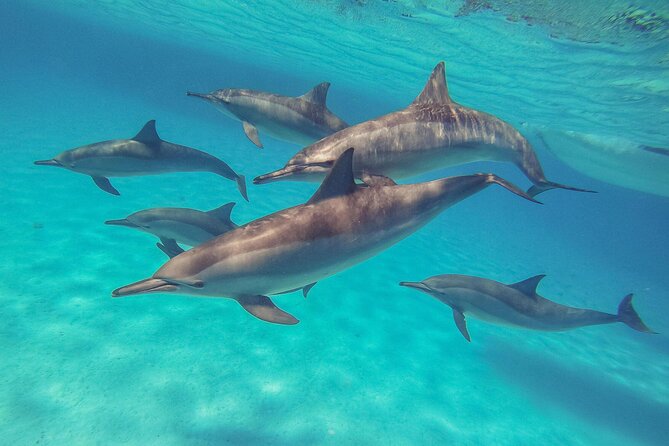
| Thursday | 🐬 Sataya Dolphin House — 3 dives | 100+ spinner dolphins. Swimming with wild dolphins in the lagoon — not a shark dive but consistently rated the most emotional dive of the week. |
| Friday | 2–3 dives — return transit | Reef dives on the return. Final dive log check. Last dinner aboard. |
| Saturday | Check-out 08:00 → transfer to airport | Marsa Alam airport ~10:00 · Hurghada airport ~12:00–14:00 |
✔️ All meals included — breakfast, lunch, dinner and snacks between dives
✔️ Free nitrox — 32% available on all dives at no extra cost
✔️ 18–21 dives scheduled across the week
✔️ Equipment rental available aboard — BCD, regulators, wetsuit, mask, fins
✔️ PADI AOWD course available mid-trip — €280, upgrades your depth access from day 3
Which itinerary for a first shark dive
For a first shark dive, the choice is straightforward. Two itineraries include Daedalus Reef as the primary shark site. The difference is certification level and what else the week covers.
| Itinerary | Best for | Cert. | From |
|---|---|---|---|
| 🦈 Pelagic Trail | First shark dive — OWD welcome, widest species range | OWD+ | 813 € |
| Golden Mix Final 2026 | AOWD divers wanting maximum depth access + southern circuit | AOWD | 813 € |
| BDE — Brothers, Daedalus, Elphinstone | Experienced divers — 50+ dives, strong currents, 5 shark species | AOWD + 50 dives | 813 € |
The Pelagic Trail is the right first shark dive trip for the vast majority of divers reading this article. It is open to OWD, covers Daedalus hammerheads, Elphinstone whitetips and Sataya dolphins in one week, runs year-round, and starts at €813 all-inclusive. If you hold AOWD and want the Red Trail formations at Daedalus plus the complete southern circuit, the Golden Mix is the answer — but book soon, it ends permanently after the 2026 season.
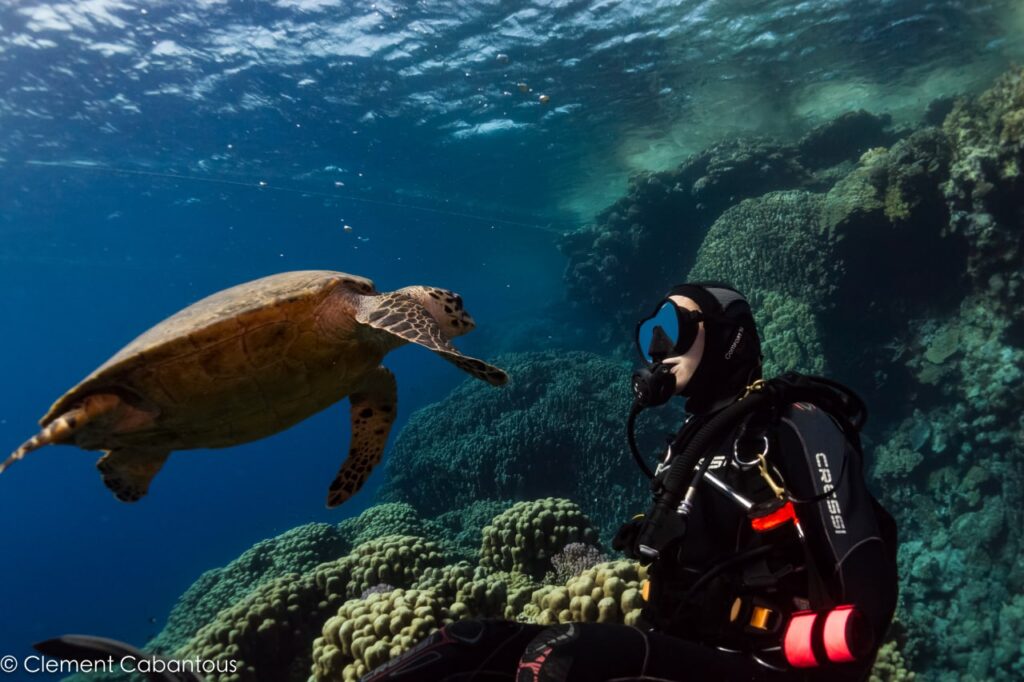
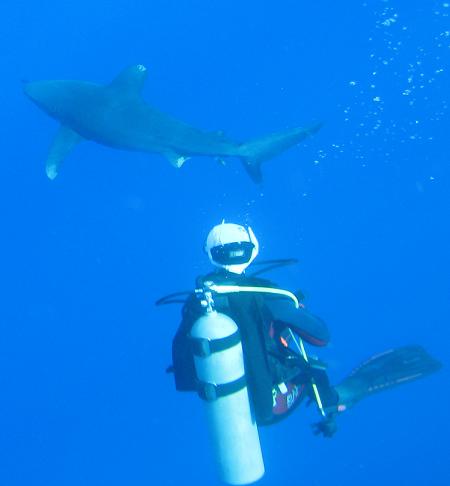
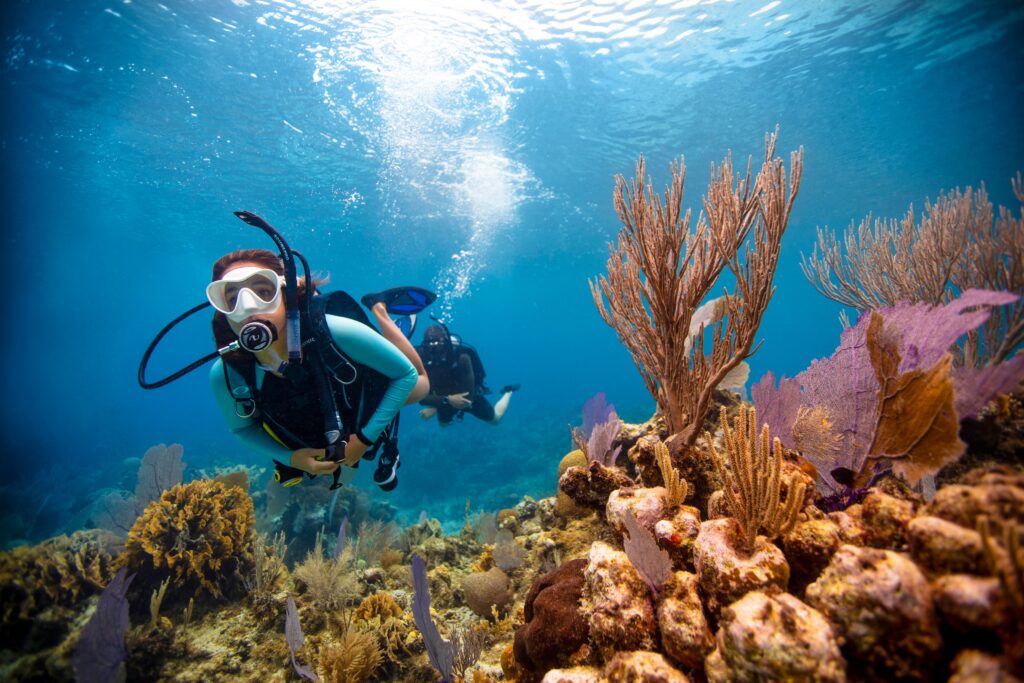
Diver entries, shark encounters and MY JPMarine at Daedalus — photos from DSM expeditions
Our Best-Selling Itineraries
Each route hand-crafted by our team. Solo divers, groups, and full charters welcome.


Prepare for Your Trip
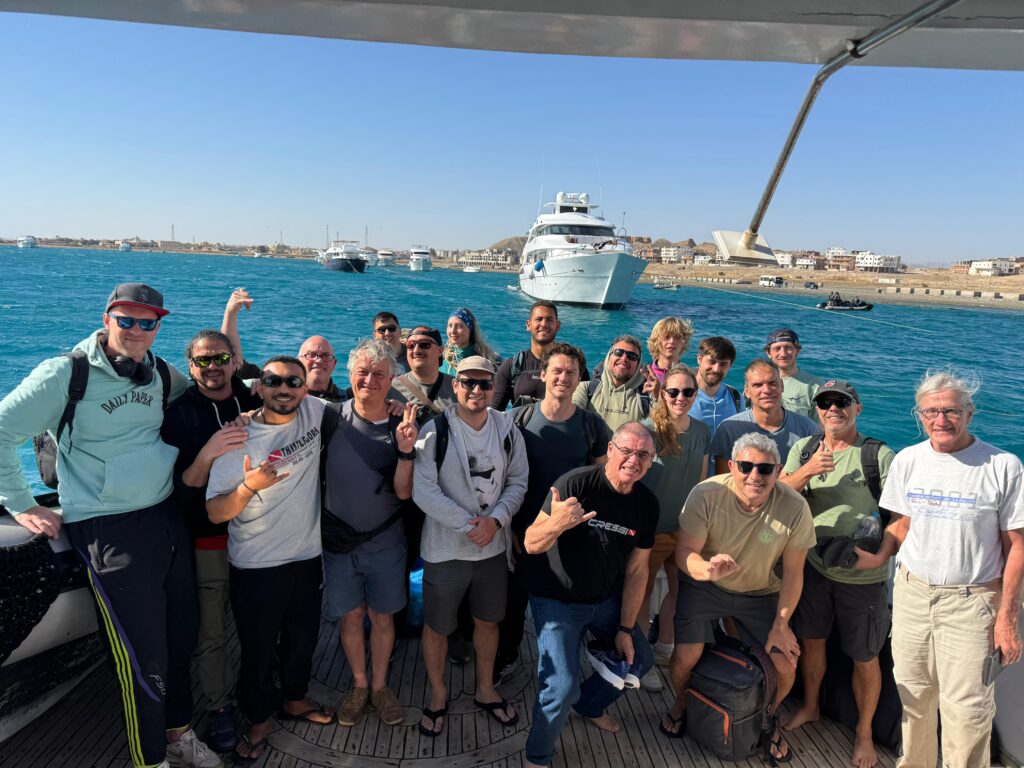

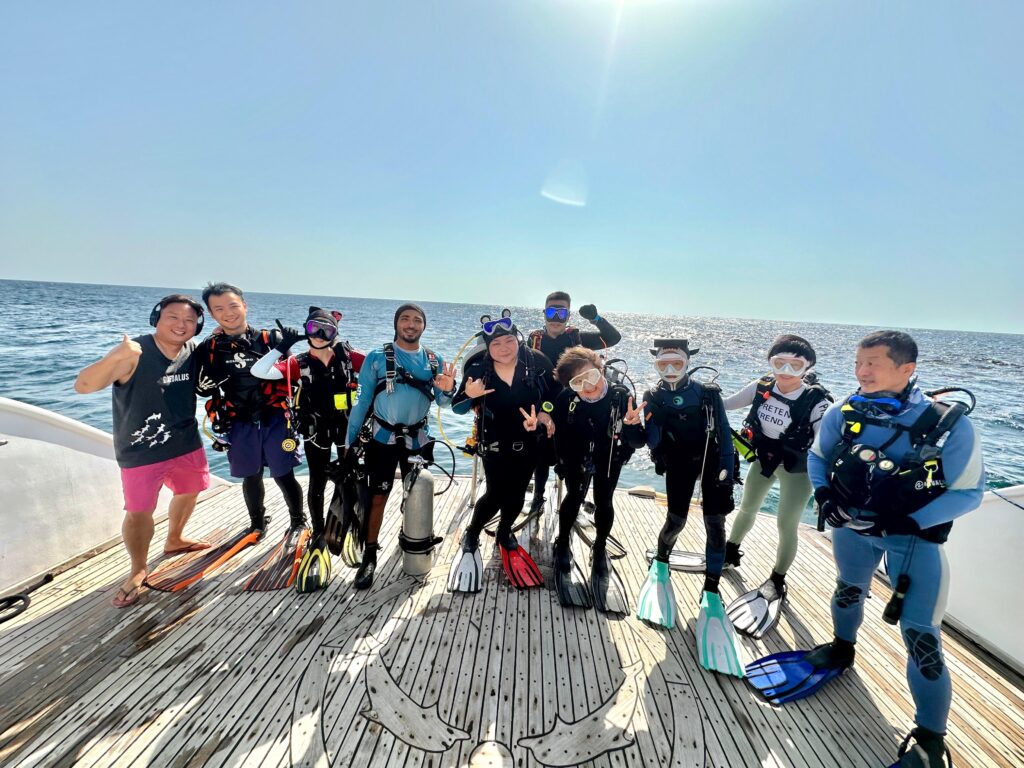
Life aboard MY JPMarine — between dives, on deck, and with the crew
Your Safety is Our Standard
MY JPMarine — built and maintained to the highest safety standards

Continue Reading
FAQ
Questions we get every week
Your first shark dive. 5 hours from Europe. From €813.
Book directly — no agency fees, no hidden costs. Saturday departures year-round from Port Ghalib.
Or email us: info@divesafarimaster.com